| Residential Treatment Systems |
 |
Nitrate Removal Systems |
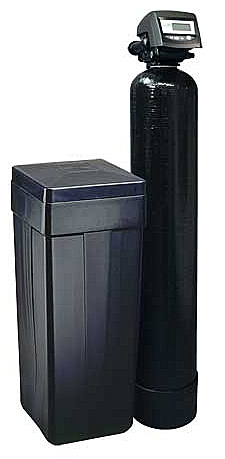
| Safe Water Technologies’ Nitrate Filter Systems are built utilizing SWT’s ProSelect™ Nitrate Resin as the primary functioning layer. Now, there is a way to treat nitrate contaminated well water easily and safely. | ||||||||||||||||||||||||||||||||||||||||||||
|
||||||||||||||||||||||||||||||||||||||||||||
| Computer Metered Nitrate Removal Systems | ||||||||||||||||||||||||||||||||||||||||||||
|
||||||||||||||||||||||||||||||||||||||||||||
|
* Conservative number with 4x safety factor built in. While higher capacities are
attainable, Safe Water Technologies recommends these guidlines due to unforseen variables that are common in well water. SWT
also recommends periodic resin cleaning with soda ash and/or resin cleaners to keep the bed as clean as possible. NOTE: Please specify nitrate and sulfate levels in order for SWT to properly program capacity. Bypass available (P/N: UA/BV1256).
Duplex systems available. International voltages available. All systems have other piping connections available. Operating pressure: 20 to 125 psi (1.4 to 8.6 bar) Operating temperature: 36 to 120ºF (2 to 48.9ºC) All pressure vessels are wound fiberglass composite tanks with copolymer polypropylene liner and are NSF® listed. |
||||||||||||||||||||||||||||||||||||||||||||
|
System capacity is rated for total nitrate capacity only. Allotment of up to 50% of total nitrate capacity may be consumed by other ions in the raw water. Before installing a nitrate system, SWT recommends a water analysis and factory consultation for proper equipment sizing and regeneration settings. MORE ON NITRATE REMOVAL The science of nitrate removal is simple, but for obvious reasons, cannot be taken lightly. The two most often used technologies for nitrate reduction are Reverse Osmosis (RO) and Ion Exchange. Ion Exchange is a more recent technology. RO is much more costly per gallon of treated water, except for third faucet drinking water applications. RO is a more full-proof method with less maintenance responsibility to the homeowner, but impractical in whole house applications. Up until recently, nitrate was an ion that once pulled from the water with a resin bed, had a very loose hold on the resin bead and a competitive ion, such as sulfate, could come along and push an already held nitrate ion back into the water. It has only been recently that this problem has been overcome. ProSelect™ Nitrate Resin is one of the first of its kind of resin that will not allow a competing ion to displace a captive nitrate ion back into the water supply. However, the selective advantage of the resin bead to the nitrate is still minimal. This means it almost acts as a first come, first served competition with a slight preference going to the nitrate. Other ions in the raw water will not displace the nitrate back into the water stream, but nitrates will not always displace sulfates either. That is why in all nitrate applications, a water analysis should be done to insure the amount of nitrate in the water, and you also need to know if there are sulfates present which will compete for room in the resin bed. Then size the system accordingly. It is very easy to do. It only requires a little math. If for example you have 30 PPM of nitrate, and 10 PPM of sulfate, that means you have a total of 40 PPM fighting for room in the bed. 25% is sulfate, and 75% is nitrate. That means that in a 1 cubic foot nitrate system with a capacity of 67,000 PPM/10 lb. of salt regenerant, the bed will be completely exhausted after 16,750 PPM of sulfate and 50,250 PPM of nitrate. So your total nitrate capacity would be 50,250 PPM nitrate (75% of 67,000 PPM) or 1,675 gallons of water. (50,250 PPM of room divided by 30 PPM/gallon of water equals 1,675 gallons before the bed is full.) (Total bed capacity) – (% of sulfate to nitrate) = (Total nitrate capacity) Still, some dealers like to reduce that number to err on the safe side. They may leave a 20% buffer to allow for an excess of water use.
|
||||||||||||||||||||||||||||||||||||||||||||
|
||||||||||||||